






























Concept

Lily’s Kitchen

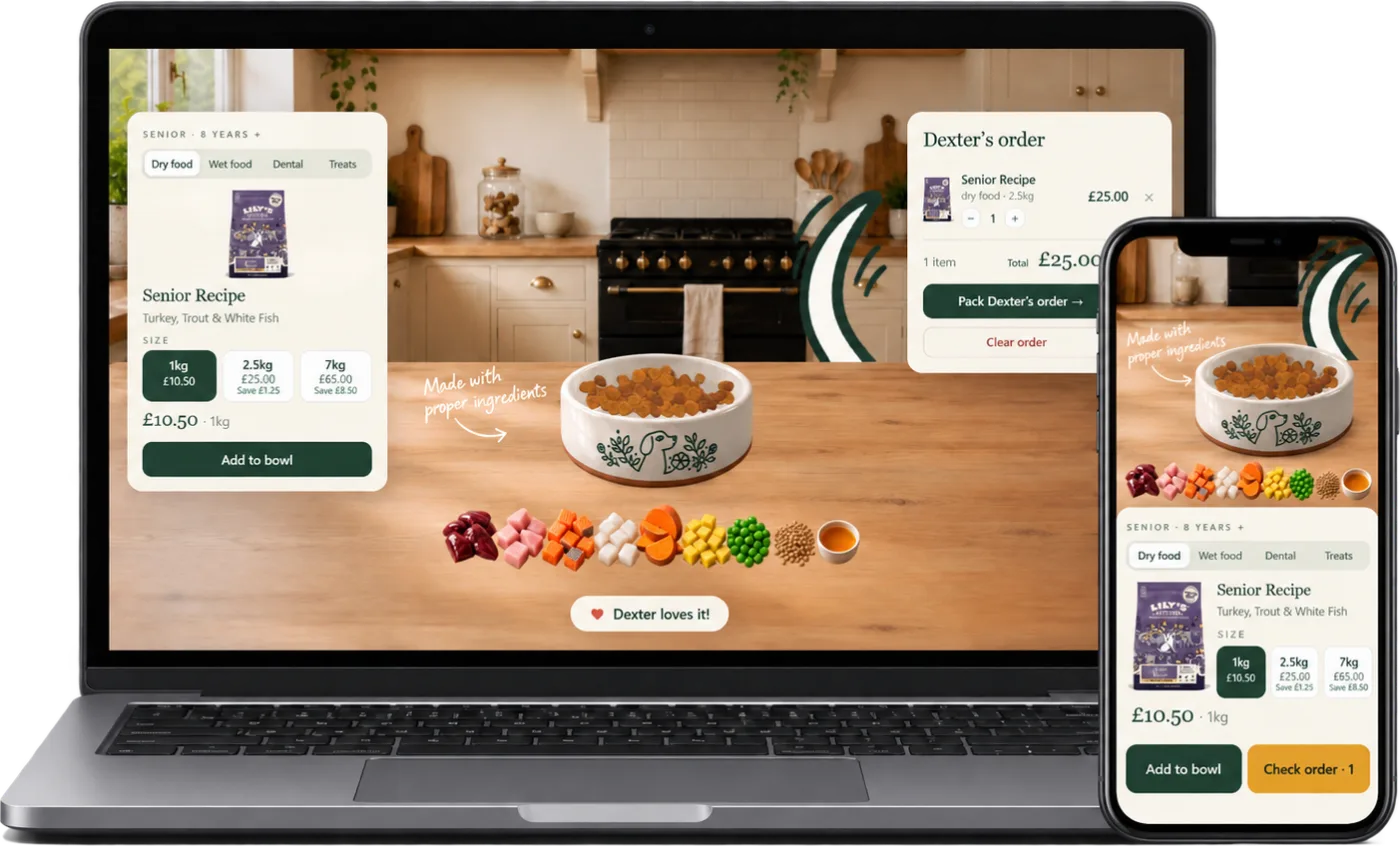
Lily’s was founded on real ingredients. So rather than listing them under the fold, this concept puts them in your pet’s bowl as you shop: pick a recipe and the bowl fills with it, piece by piece, and stays filled as you go.

Concept piece · Pet food ecommerce · Unsolicited, not a client Try the demo →
The concept running: a recipe card beside a ceramic bowl filled with kibble and dental chews on a kitchen counter.
Type Self-directed concept, one screen
Built for Brands with a story in the small print
Time to build 3–5 days
Tech Vanilla JS, canvas, Matter.js physics

The problem

Pet food online is a grid of bags. Every brand shows you the same thing: a photograph of packaging, a weight, a price, and a button. Whatever is actually different about the food gets pushed into a paragraph under the fold, or an ingredients table written for compliance rather than for people.

Which is odd, because for a brand like Lily’s the ingredients are the story. The company was founded on the idea of proper food made with real ingredients. That is the reason to pay more for it. And it is the part of the story the shop is worst at telling. The thing most likely to convince someone sits in the place they are least likely to look.

The idea

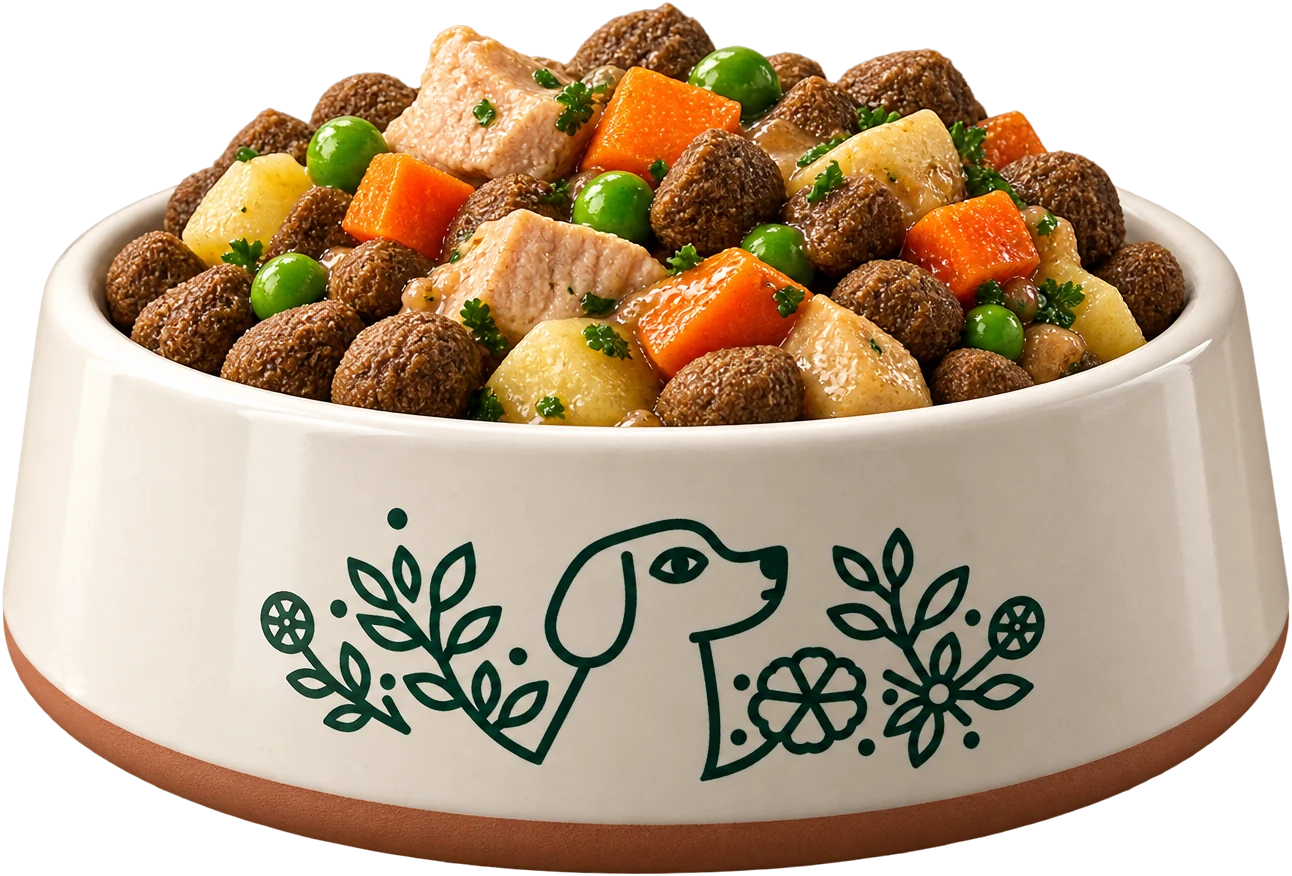
Stop describing the ingredients and start handing them over. As you move through the range, the ingredients in whatever you are looking at appear in your pet’s bowl and settle there. Turkey, trout, sweet potato, peas. You do not read what is in the food; you watch it arrive.

The bowl is the basket. Adding a recipe fills it, and what you have chosen stays in front of you as a pile of actual food rather than a number in the corner of the screen. Choosing dental chews puts chews in. Switching to the wet range puts chunks in. The difference between the products becomes something you can see rather than something you have to compare.

None of that is decoration. It is the founding idea of the brand, moved out of the product description and into the way the shop works.

How it works

One screen, one bowl, and a full ordering flow behind it. It is a deliberately limited prototype rather than a shop: enough to prove the experience, not to run a business on.

A ceramic bowl on a kitchen counter, filled with kibble, wet food and dental chews, with the row of raw ingredients laid out in front of it.

The basket is a bowl

Every piece is a real body in a physics engine. Food arrives at the bottom of the bowl and pushes what is already there upward, so the level rises and settles into a pile that is different every time. Nothing is a looping animation.

The recipe card showing Woofbrush Dental Chews with chew size and pack size options, beside a bowl of chews and the seaweed, fennel and coconut that go into them.

Every recipe brings its own

Each recipe carries its real ingredient list, and those are the pieces that appear. Switch from dry to wet and the contents of the bowl change with it.

The filled bowl on the counter with the dog’s tail wagging behind it.

It knows whose dinner it is

You name your pet before you start, and the shop uses it throughout. Choose a dog and a tail wags behind the counter, harder each time something goes in the bowl. Choose a cat and it paces instead.

A Lily’s Kitchen delivery box on the counter, stamped Packed for Dexter.

All the way to the doorstep

Choose how often the box comes, then send it. The counter clears, a box lands on it, your pet’s name is stamped into the space on the front, and it slides off to the van.

Who this is for

Any business whose best argument is a fact customers never read. If what makes you worth buying from is buried in a spec table, an ingredients list, a provenance note or an about page, then the shop is hiding the reason to choose you.

Pet food Food & drink Supplements Skincare Coffee roasters Anything with an ingredients list Anything sold on provenance Anything sold on craft

The method transfers even when the idea does not. Work out what a customer should understand, value or remember about the business, then find a way to let them experience it instead of reading it. For Lily’s that meant filling a bowl with the ingredients. For someone else it will mean something else entirely.

The technology isn’t the idea. It’s a tool for making the idea work.

See it working

Name your pet, pick a recipe, and watch the bowl fill. Then pack the order and send it. Works on a phone as well as a desktop.

Try the demo → Or start a conversation about your own project →
Up next Linen & Light